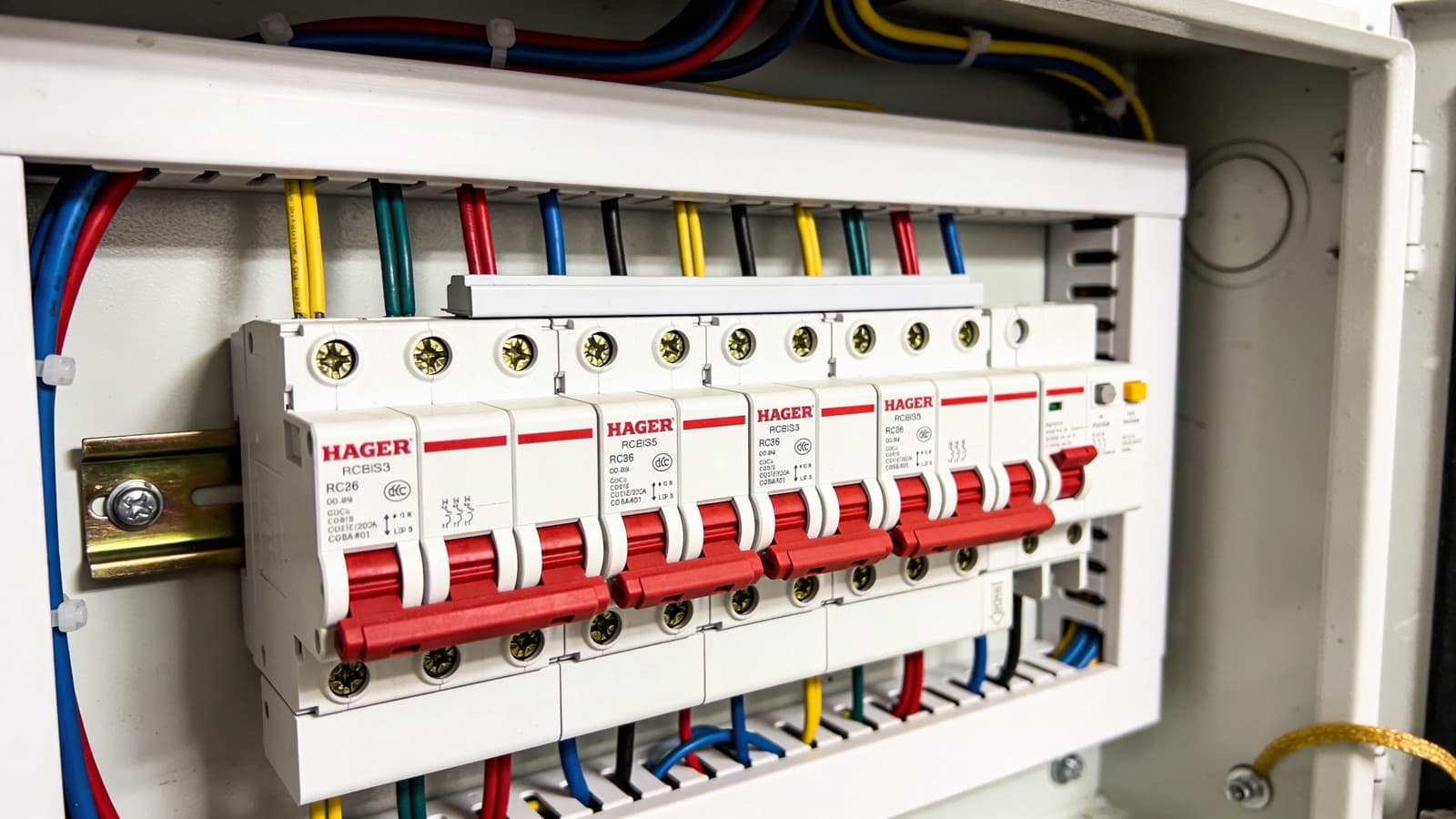
If your fuse board still has the old-style rewireable fuses, or it trips every time the kettle and the immersion run together, an upgrade is probably overdue. A modern consumer unit is the single biggest safety improvement most older Irish homes can make — and it's far cheaper than people expect. Here's what it costs in 2026 and exactly what you're paying for.
Typical Cost in 2026
A standard consumer unit upgrade in Ireland runs between €450 and €1,400, with most domestic jobs landing around €700–€900. A straight like-for-like board swap on an accessible installation sits at the lower end. A larger home, a board in an awkward spot, or one that needs extra circuits and remedial work pushes toward the top. The price includes the new board, modern protective devices, full testing, and a Safe Electric certificate.
What Affects the Price
- Number of circuits — More circuits means a bigger board and more protective devices. A small apartment is cheaper than a four-bed with outbuildings.
- RCBOs vs a split board — A board with an individual RCBO on every circuit costs more than a basic split-load board, but it's worth it: a fault on one circuit trips only that circuit, not half the house.
- Condition of the existing wiring — If the inspection finds problems on the circuits feeding the board, those need attention before a new board goes on. An upgrade sometimes uncovers issues that were hidden before.
- Earthing and bonding — Older homes occasionally need earthing or main bonding brought up to standard at the same time. This is a safety essential, not an add-on.
- Location and access — A board buried in a hot press behind shelving takes longer than one mounted clear in a hallway.
Signs You Need an Upgrade
- Old rewireable fuses (the ones with fuse wire) instead of breakers
- No RCD protection — no "test" button anywhere on the board
- The board trips often, or won't reset
- Signs of heat: scorch marks, a burning smell, or a board that's warm to the touch
- You're adding load: an EV charger, an electric shower, a heat pump, or a home extension
Fuse Board Upgrades for EV Chargers
This is the most common reason we upgrade boards in 2026. A 7kW EV charger needs its own dedicated circuit, and many older boards simply don't have the space or the protection to take one safely. Where that's the case, expect roughly €500–€650 for the board work on top of the charger installation. We check this on the day we quote the charger, so there are no surprises — and you may be able to offset part of the cost with the SEAI grant. See our guide to the SEAI €300 grant for the detail.
What's Included
- A new consumer unit — we fit Hager boards as standard
- Modern protective devices (RCBOs, or RCD plus MCBs to suit the installation)
- Surge protection where appropriate
- Full testing of the board and connected circuits
- A Safe Electric completion certificate
Is It Worth It?
The consumer unit is the part of your electrical system that protects everything downstream of it — and everyone in the house. Moving from old fuse wire to modern RCBO protection is the difference between a fault tripping a breaker in milliseconds and a fault turning into a fire. For a few hundred euro, it's the best-value safety upgrade in the home.