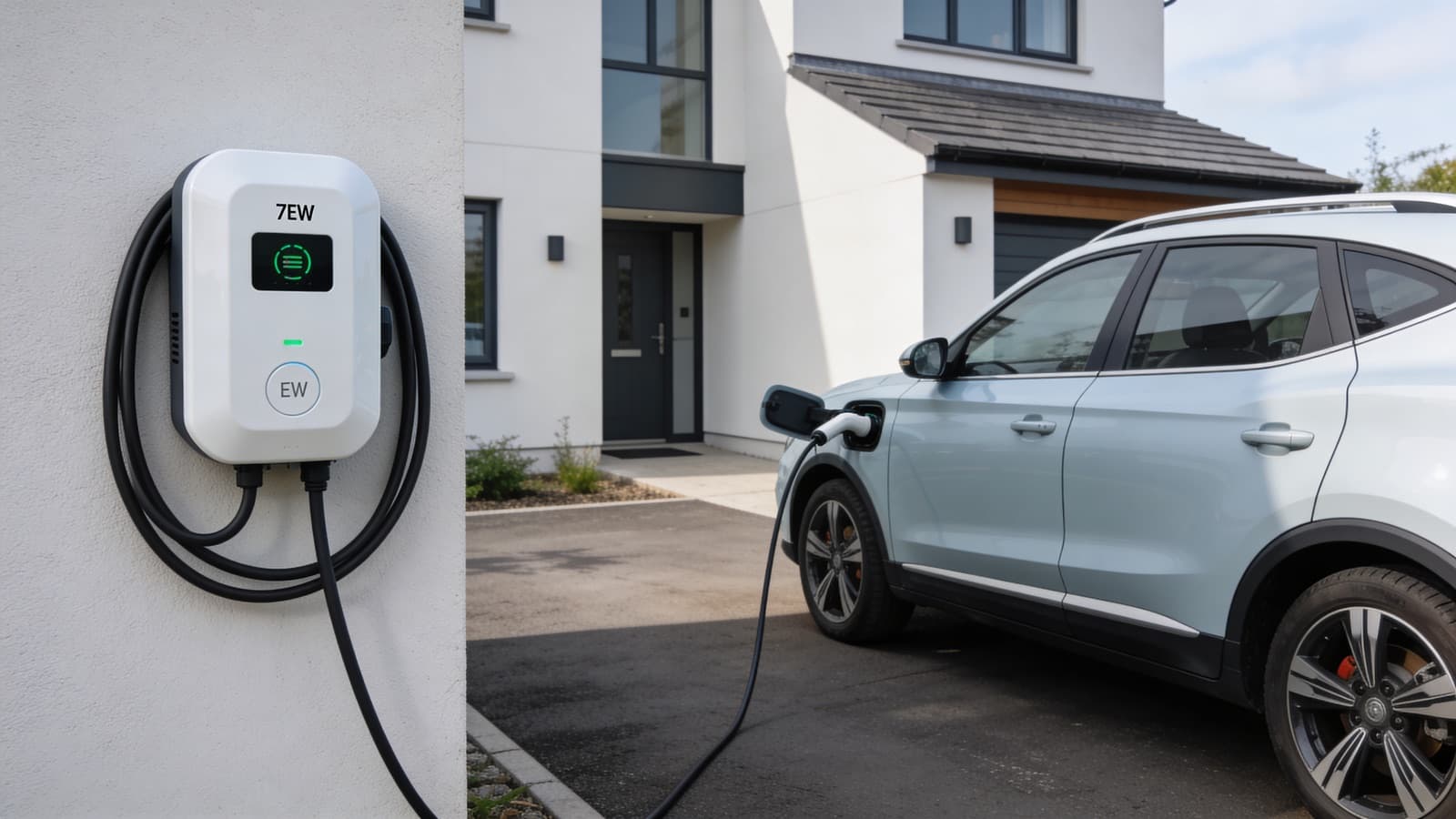
If you've bought an electric or plug-in hybrid car, the SEAI will put €300 toward a home charger. It's one of the simplest grants in the country to claim, but a few details trip people up. Here's exactly how it works in 2026 and how to make sure you qualify.
What Is the SEAI Home Charger Grant?
The Electric Vehicle Home Charger Grant is a government-funded scheme run by the Sustainable Energy Authority of Ireland (SEAI). It puts up to €300 toward the purchase and installation of a home charge point. It applies whether you've just bought the car or you're a few years into running one, the grant is about the charger, not the car purchase.
Who Qualifies?
- You own, or have ordered, an eligible electric vehicle or plug-in hybrid (it must be on the SEAI eligible-vehicle list)
- The property hasn't already claimed an EV home charger grant for the same charge point
- You have an off-street parking space for the charger
- The charger is installed by a registered electrician and meets the grant's technical requirements
SEAI tweaks the eligibility rules from time to time, so check the current criteria on seai.ie before you apply, or just ask us and we'll tell you where you stand. Living in an apartment? There's a separate Apartment Charging Grant for residents and owners in multi-unit developments, worth checking if the standard home grant doesn't fit your situation.
3.6kW or 7kW: Which Charger?
Almost every Irish home should fit a 7kW charger. It charges roughly three times faster than a basic 3.6kW unit and fully replenishes most cars overnight on a standard single-phase supply, which is what nearly all homes have. The grant amount is the same either way, so there's rarely a reason to go smaller. Brands like Zappi, Easee, Ohme and Hypervolt are the popular choices, all with smart scheduling so you charge on cheaper night rates.
How to Apply
- Apply on the SEAI website before the work is done. You create an application and get approval first
- Have the charger installed by a registered electrician
- Submit your documents: proof of purchase, the installer's details, and the completion paperwork
- Receive payment: the grant is paid back to you after a satisfactory installation, usually within a few weeks
You pay the full amount upfront and claim the €300 back. We handle the technical paperwork and make sure the installation meets the grant criteria, so the claim goes through cleanly.
What You'll Need
- Proof you own or have ordered an eligible vehicle
- Your MPRN (the meter point reference number printed on your electricity bill)
- The installation address and proof of eligibility
- The completion certificate from your registered installer
Do You Need a Fuse Board Upgrade Too?
Sometimes. A 7kW charger needs its own dedicated circuit, and some older boards don't have the capacity or protection to add one safely. We check this when we quote. If a board upgrade is needed, we tell you the full cost upfront rather than discovering it mid-job. Our fuse board upgrade cost guide covers what that adds.