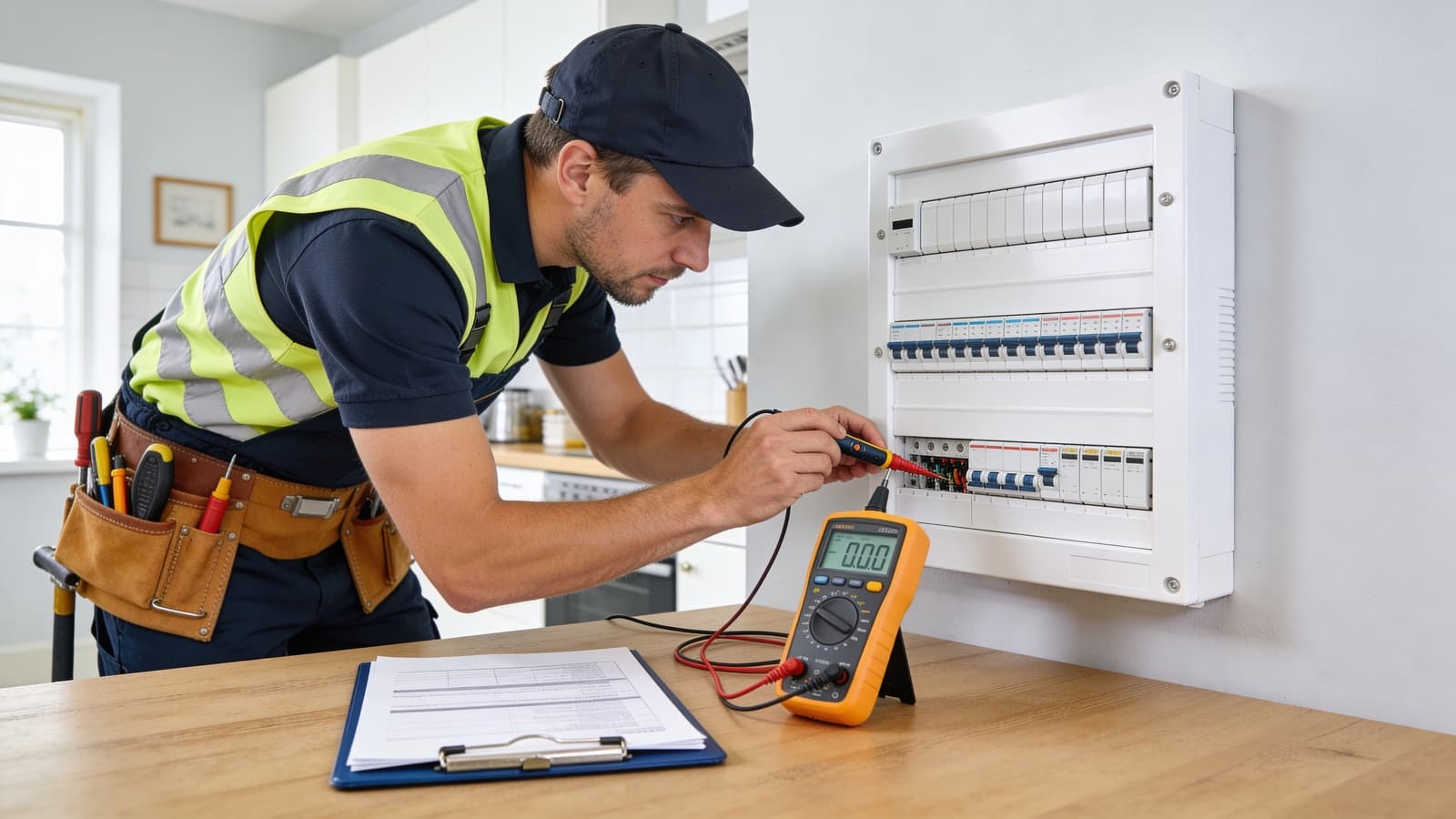
If a solicitor, estate agent or letting agent has asked you for an "electrical cert", you're not alone. It's one of the most common questions Irish homeowners bring to us. The short answer: no single law forces a homeowner to hold a certificate just for owning a house, but the moment money or tenants change hands, you'll almost always need one. Here's how it actually works.
The Two Certificates People Mean
When someone says "electrical cert" they usually mean one of two things:
- A Completion Certificate: issued by a Safe Electric Registered Electrical Contractor after new wiring or a modification. It confirms the work meets IS 10101, the national wiring standard. You get this when you have work done.
- A Periodic Inspection Report (PIR): a health check of the existing installation. It grades the condition of your wiring, board and circuits. You get this to show what condition the installation is in right now. Note the name: in Ireland it is a PIR, not an EICR. The EICR is the British document, issued under the UK wiring regulations, and it turns up constantly in advice aimed at Irish readers because that advice was written for a different country.
For selling or letting, the PIR is usually what's being requested, and Safe Electric is explicit that it is a report, not a certificate. The two are not interchangeable.
Selling a House
There's no law that says you must produce an electrical cert to sell a home in Ireland, but conveyancing has its own rules. If electrical work was carried out on the property, the buyer's solicitor will ask for the Completion Certificate for that work. If you've had a rewire, an extension, or a board upgrade and can't find the cert, the sale can stall while it gets sorted. A current Periodic Inspection Report is also a quiet selling point: it tells buyers the wiring won't need money spent on it the week they move in.
Buying a House
On the buying side, a pre-purchase electrical survey is one of the cheapest forms of insurance you can buy. An older property with original wiring can need anything from a board upgrade to a full rewire, and that's a number worth knowing before you sign. A Periodic Inspection Report gives you exactly that, and a stronger hand in the price negotiation if remedial work is flagged.
Renting Out a Property
Landlords carry a clear duty here, but it is worth being precise about what that duty is. The Housing (Standards for Rented Houses) Regulations 2019 require that electricity supplies are safe and in good repair. That is a duty about the condition of the installation. It does not specify a certificate, and it does not specify an interval. Enforcement is by local authority inspection, with an Improvement Notice or a Prohibition Notice, rather than by a document check.
The "electrical cert every five years" rule people quote at Irish landlords is English law, introduced for the private rented sector in England in 2020. It does not apply here. What is true is that a current Periodic Inspection Report is the most straightforward way to evidence you met the Irish duty if it is ever questioned, and most agents and insurers now expect one. If a tenant is ever injured by a fault you cannot show you checked for, that is your problem, and the report is your evidence. Treat it as good practice with a real commercial reason behind it, rather than as a legal deadline you are missing.
What a Periodic Inspection Report Actually Checks
A qualified electrician inspects and tests the whole installation:
- The consumer unit (fuse board) and its protective devices
- Earthing and bonding, the safety backbone of the system
- Every circuit, tested for insulation resistance, polarity and earth fault loop impedance
- Sockets, switches and accessories for damage or overheating
- RCD operation, the device that cuts power fast enough to prevent a fatal shock
Findings on an Irish report are coded 1 to 4: 1 requires urgent attention, 2 requires improvement, 3 requires some attention, and 4 means the installation does not comply with the current National Rules. The C1/C2/C3 codes you may have read about elsewhere are the UK system and will not appear on an Irish report. Code 4 is the one worth understanding, Safe Electric states that a non-compliance with the current rules does not necessarily mean the installation is unsafe, so a 1990s house showing several code 4 items is normal rather than alarming. We explain every code in plain English so you know what it means for the sale or the tenancy.
What It Costs in 2026
A Periodic Inspection Report on a typical three-bed house takes two to three hours and costs roughly €200–€350 depending on size and how the installation is laid out. If the report flags remedial work, we price that separately and clearly, so you decide what happens next with the full picture in front of you. There's no obligation to have us carry out any follow-up work.
How to Get Your Cert Sorted
Use a Safe Electric registered contractor. Only a registered contractor can issue a valid Completion Certificate, and a proper Periodic Inspection Report comes with the completed Test Record Sheet showing measured values, not a one-line "pass". We're Safe Electric registered (A6700), we test with calibrated instruments, and we turn reports around quickly because we know a sale or a tenancy is usually waiting on it. If you're not sure which certificate you actually need, send us the request from your solicitor or agent and we'll tell you straight. See our testing & certification service for what's involved.