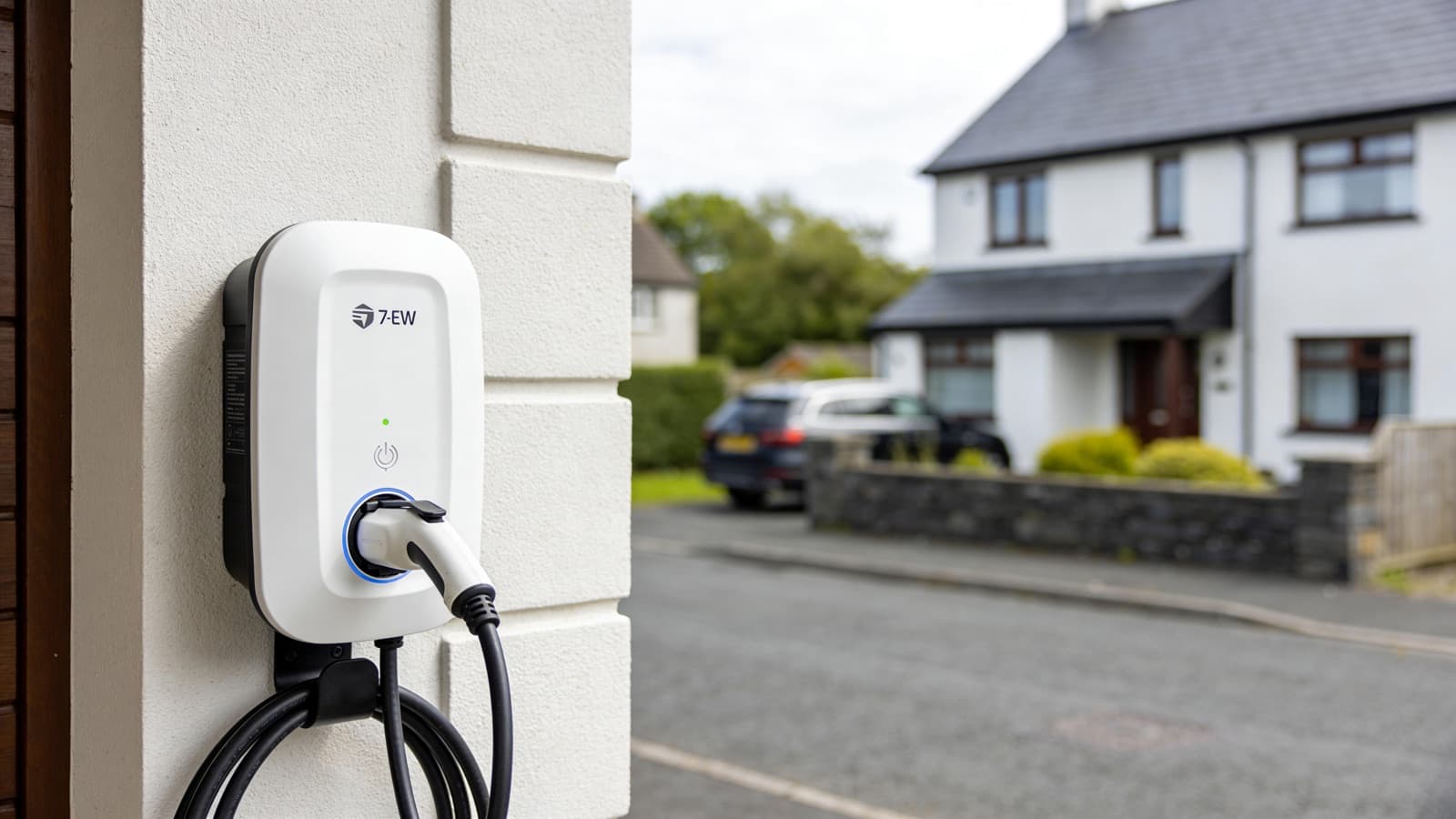
Installing a home EV charger is one of the smartest upgrades you can make to your property. It's more convenient than public charging, significantly cheaper per kWh, and adds genuine value to your home. Here's a clear guide to help you make the right decisions.
Charger Types: 7kW vs 22kW
Most Irish homes are fitted with a 7kW single-phase charger. This is the standard for residential installations. It delivers a full charge overnight (typically 6–8 hours for a 60kWh battery) and works on a standard single-phase electricity supply, which is what the vast majority of homes have. Brands like Zappi, Easee, and Ohme are popular choices, all offering smart scheduling so you can charge during cheaper night rates.
A 22kW three-phase charger is significantly faster (roughly three times quicker) but requires a three-phase electricity supply. Most residential properties in Ireland don't have this, so it's more common in commercial or new-build settings. If you're building a new home, it's worth having three-phase installed from the start, the future-proofing is well worth the marginal extra cost.
SEAI Grant: Up to €300
The SEAI offers a grant of up to €300 towards the purchase and installation of a home EV charger. To qualify, you need to own an eligible electric or plug-in hybrid vehicle and the charger must be installed by a registered electrician. The grant is applied after installation. You pay the full amount upfront and claim back through SEAI. We handle all the paperwork for you and ensure the installation meets the grant criteria. For the full eligibility and application detail, see our guide to claiming the SEAI €300 grant.
What the Installation Involves
A typical home EV charger installation takes 3–4 hours. Here's what's involved:
- Site survey: We check your consumer unit capacity, assess the cable run from the board to your parking spot, and confirm the charger location
- Consumer unit upgrade: If your board doesn't have capacity for an additional circuit, we'll upgrade it. Many older boards need this regardless. See our fuse board upgrade cost guide for what that adds
- Cable run and charger mounting: We run a dedicated 10mm cable from the consumer unit to the charger location, install the charger, and connect it
- Testing and commissioning: Every installation is fully tested, and we issue a Safe Electric certificate for the new circuit
What to Consider Before You Book
A few things to think about before scheduling your installation:
- Charger location: Ideally within 10 metres of your consumer unit. Longer runs are possible but add to the cost
- Wi-Fi signal: Smart chargers need a decent Wi-Fi connection to enable scheduling and monitoring. Check the signal at your chosen location
- Future needs: If you're likely to add a second EV, consider pre-wiring a second cable run now. It's much cheaper during the initial installation
Why Use a Safe Electric-Registered Installer
An EV charger pulls significant current, typically 32 amps on a dedicated circuit. This isn't a DIY job and it isn't something a general handyman should be doing. A Safe Electric-registered electrician ensures the installation is safe, compliant with wiring regulations, and properly certified. That cert protects you for insurance purposes and is required for the SEAI grant claim.